History
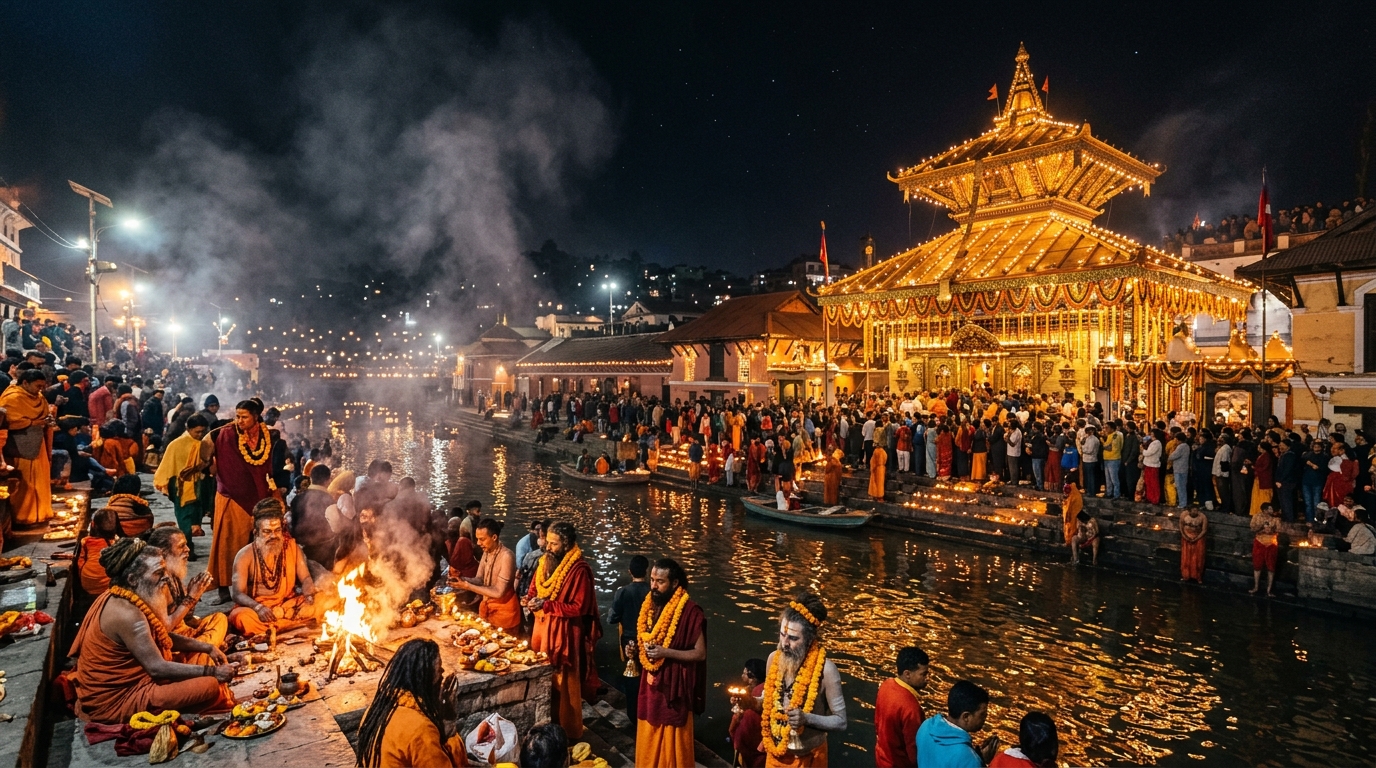
Maha Shivaratri, literally "the Great Night of Shiva," is one of the most important Hindu festivals observed across Nepal and India. At Pashupatinath Temple — a UNESCO World Heritage Site on the banks of the Bagmati River in Kathmandu — the festival takes on an extraordinary scale. Thousands of Sadhus (Hindu holy men) from across South Asia converge on the temple complex, their ash-smeared bodies and dreadlocked hair making for an unforgettable spectacle.
The origins of Maha Shivaratri trace back to ancient Hindu scriptures, which describe this night as when Lord Shiva performed the Tandava — his cosmic dance of creation and destruction. Devotees believe that worshipping Shiva on this night with fasting and all-night vigils can wash away sins and grant moksha (liberation from the cycle of rebirth).
Significance
At Pashupatinath, the night is marked by the lighting of thousands of oil lamps and the chanting of devotional hymns that echo across the river. The government of Nepal officially declares Maha Shivaratri a public holiday, and cannabis (considered sacred to Shiva) is legally permitted within the temple precincts on this day — drawing curious visitors from around the world alongside genuine pilgrims.
The festival reinforces Nepal's deep spiritual identity as the only Hindu kingdom in the world (though now a secular republic, the culture remains deeply Hindu).
What to Expect
Arrive at Pashupatinath in the early evening to witness the lamp-lighting ceremony. The area around Arya Ghat fills with Sadhus who are happy to be photographed in exchange for a small donation. The main Shiva Lingam inside the temple is accessible only to Hindus, but the surrounding ghats and terraces offer spectacular views of the processions. Dress modestly and bring warm clothing — Kathmandu evenings in February are chilly.